
What Makes a Will Valid In Ghana
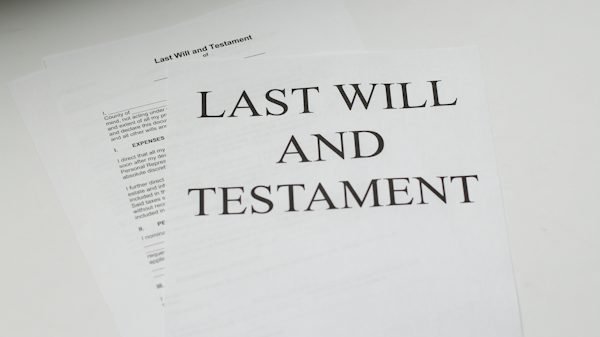
What Makes a Will Valid In Ghana.
Date Released
4 November, 2026
Introduction
In Ghana, disputes over the estates of deceased persons continue to occupy a considerable portion of the time of our courts. Families are often torn apart, properties are left idle, and dependants are left without support, all because a Will was either never made or was made without regard to the requirements of the law. It is worth indicating that a Will which fails to meet the statutory requirements is, at its barest minimum, an expression of wishes which the law will not enforce. Against this background, this write up will take a look at the basic elements of a valid will under the Wills Act, 1971 (Act 360).
Your Wishes, Your Legacy, Your Peace: Why Making a Legally Valid Will Matters.
Capacity And Free Will
The first requirement relates to the person making the Will. Section 1(1) of Act 360 provides that a person of or above the age of eighteen years may make a Will disposing of his or her property. Furthermore, the maker of the Will (the Testator) must be of sound mind. Section 1(2) is instructive in this regard, as it states that a person suffering from insanity or infirmity of mind, such that he or she cannot understand the nature or effect of a will, lacks capacity to make one while that condition continues.
In addition to capacity, the law requires that the Will be the free act of the Testator. Section 1(3) provides that a Will, or any provision of it, obtained by fraud or made under duress or undue influence is void. Consequently, a Will procured through pressure from relatives or other interested persons cannot stand, however properly it may otherwise have been executed.
Formal Requirements: Writing, Signature Aand Witnesses
Section 2 of Act 360 sets out the manner in which a will must be executed. Specifically, the following requirements must be satisfied:
- Writing: The Will must be in writing (section 2(1)).
- Signature: The Will must be signed by the Testator.
- Position of the signature: A signature does not give effect to any disposition which appears below it, follows it, or is inserted after it has been made (section 2(2)). As such, the signature should appear at the end of the will.
- Witnesses: The Testator must make or acknowledge the signature in the presence of two or more witnesses present at the same time (section 2(3)). The witnesses must, in turn, attest and sign the will in the presence of the Testator.
Special Cases
The Act makes particular provision for testators who are blind or illiterate. Section 2(6) requires that a competent person carefully read over and explain the contents of the Will to the Testator before it is executed. That person must also declare in writing on the will that this was done and that the Testator appeared perfectly to understand it.
Moreover, the Act relaxes the formal rules in certain circumstances. A member of the Armed Forces on active service, of whatever age, may make a Will in his or her own handwriting without witnesses, in writing attested by one witness, or orally before two witnesses (section 6). Likewise, a Will executed outside Ghana is properly executed if it conforms to the law of the place of execution, or of the Testator's domicile, habitual residence or nationality (section 15). Finally, section 19(3) preserves the validity of oral testamentary dispositions made in accordance with customary law.
Conclusion
In conclusion, a valid Will under Act 360 rests on two pillars: a Testator who has capacity and acts freely, and a document that is executed in strict compliance with the formalities of the Act. A failure on either front could render the Will void, with all manner of consequences for the beneficiaries left behind. There is the need therefore for persons intending to make a Will to seek proper legal advice, to ensure that the Will is properly prepared deposited. A properly made Will goes to contribute to peace within families and the orderly management of ones estates after death.


Your Strategic Legal Partner.